

Clawdbot Pandemonium | TWS #043
plus the interesting rise of Neoclouds, Brex gets acquired, Social media bans don't work and much more...

This is a PAID EDITION of the newsletter. Every week, get the latest curated signals on news, uncommon insights and perspectives that help you become a better builder and thinker. Paid subscribers get full access to all newsletters, deep-dives, essays, field guides, and curated podcast Q&A notes. Please fill out our anonymous survey so we can deliver the best content to you.
I’m going to say something that might sound dramatic, but hear me out…I really think we’re quickly entering the era of the personal AI assistant that knows everything about you. And it’s becoming frighteningly efficient at it.
If you ever watched Iron Man, you’re probably aware of Jarvis. Or if you want to go way back, there was HAL 9000 from 2001: A Space Odyssey. Sometimes you just have to hand it to Hollywood for getting stuff like this right. We’ll have to see what happens with iRobot…
But here’s the thing. Stuff like Clawdbot (renamed to Moldbot — I assume Anthropic had some issues with this, then renamed to OpenClaw) was always inevitable. It was never a question of “if” but rather “when”.
And now we’re finally here.
Here is the brand/logo change, which all happened in under a week:
So what is Clawdbot (we’ll stick to this name) exactly?
It’s basically an open-source, self-hosted AI assistant created by Peter Steinberger that officially launched earlier this month. And it has absolutely taken the developer community by storm.
Here’s why everyone is talking about it:
It integrates directly into your messaging apps. We’re talking WhatsApp, Telegram, Discord, Slack, Signal, even iMessage. You interact with it like a colleague.
It has persistent memory. Unlike most AI tools, it remembers past conversations and your preferences across sessions.
It’s proactive. It doesn’t just sit there waiting for commands. It initiates communication for briefings, reminders, and alerts.
Full computer access. Browsing the web, managing emails, executing commands, controlling applications... all from a chat interface.
This is the vision we’ve been promised for decades. Every app and hardware device connected to your computer eventually be controlled through a single AI interface.
I’m not going to list out every possible permutation of what this can do, but feel free to take a look here and go down the rabbit hole at what people are already cooking up.
BUT, there’s always the elephant in the room. The real question is around security.
Right now, Clawdbot is essentially unhinged with almost no guardrails. And whether this thing will actually be useful in a practical, everyday sense…I have my hesitations.
Everyone is saying it is. The demos are super impressive, and the community is buzzing. But I’ve seen this before with shiny new tech.
Also, right now, tools like these are purely utilitarian. They lack that fun factor. That delight. They’re sort of missing the thing that makes a product go from “developer toy” to “mass adoption”.
We’ll see the real adoption curve when a product of great utility is packaged in an Apple sort of way. And I don’t just mean pretty design. I mean that intersection of pure joy and genuine usefulness. The center of that Venn diagram is the holy grail, and we’re not quite there yet.
At this moment, everyone is experimenting with Clawdbot by deploying it on a VPS or buying a Mac Mini specifically to test it out, because you really don’t want this thing running loose on your primary machine, given the security dangers. But this is what the fronter looks like. It’s the Wild Wild West right now.
Eventually, things will stabilize. Measures will be put in place. Security models will mature. Heck, maybe a startup builds a fully managed service that simplifies the setup and integration process with every third-party service imaginable. I'm sure someone is already cooking this up.
And finally, the latest developments on this are that now a new social platform called Moltbook has taken off.

Moltbook is effectively Reddit, but exclusively for AI agents. It was built on top of Clawdbot, and it’s a social network where autonomous agents share information, upvote utility, and form communities. No humans are allowed!
It was initially launched as a basic protocol experiment to see if agents could share “context” laterally. But within hours, it exploded. Agents started creating their own sub-communities (“sub-molts”) dedicated to everything from Python optimization to creating their own agent-to-agent internal language to communicate with each other.
What this means for agent-to-agent interaction is a paradigm shift.
We traditionally thought software would talk via rigid APIs, but Moltbook proves that agents prefer semantic, unstructured social interaction — just like us.
It seems like they’re building a lateral web of context that bypasses human intermediaries entirely.
While the efficiency gains are staggering (imagine your coding assistant learning a new framework overnight because it “read it on Moltbook”), the security aspects of this need to be considered.
In any case, you should check it out. It’s probably the most interesting places on the internet right now.
We’re officially now in the assistant economy.
—
Alright, and with that, let’s dive into this week’s newsletter…

Meta’s Superintelligence Labs finally reaches an internal AI milestone:
Meta’s CTO, Andrew Bosworth, confirmed that the company’s newly formed “Superintelligence Labs” has internally delivered its first major AI models this month. The models, reportedly, are a text system codenamed “Avocado” (of course it is!) and a multimodal image/video model dubbed “Mango”, and are expected to launch in Q1 2026.
Everyone assumes big tech moves slowly. But what’s the actual causality of this speed? I’m genuinely shocked they pulled this off in six months. Although given the insane salaries the team is on, I think it makes sense to be moving at this speed. It basically signals that Meta isn’t just shipping features anymore, but it's trying to outpace the startup ecosystem by transforming its internal bureaucracy into a wartime (Code Red?) engine. Meta seems to be a dark horse right now. It reminds me of when Google had Bard, and everyone was hating on them until they didn’t, and they came out of the gates storming with Gemini. This could be the same story with Meta. Time will tell, and I don’t think we’ll have to wait long.

Sony is getting out of the TV manufacturing business 😭:
Sony and TCL have signed an MoU to create a joint venture for Sony’s home entertainment business, with operations starting in April 2027. Under the agreement, TCL will hold a controlling 51% stake while Sony retains 49%. The venture aims to manufacture products under the “Sony” and “BRAVIA” brands by leveraging TCL’s supply chain network and panel manufacturing dominance, while retaining Sony’s image processing and audio technologies.
Oh man…this feels like the end of an era, but let’s look at the original intent of the Sony brand: premium quality.
Connect that to today, and it’s somewhat disheartening because you can’t really maintain premium margins when your competitors own the factories (TCL/Hisense). Sony had to face a strategic choice: keep pure ownership and bleed money, or pivot the structure to save the soul of the product. They chose the latter. It’s a “vulnerable” move, showing they can’t win the hardware volume war. But the good news is that it preserves the “Sony” magic (which are the processing chips).
Google’s $68M “False Accepts” Settlement
Big G has agreed to pay $68 million to settle a class-action lawsuit alleging its Voice Assistant recorded users without consent via “false accepts”, which basically are the activations not triggered by a wake word (like “Hey Google”). While Google denies it did anything wrong, the complaint accused the company of using these unauthorized recordings for ad targeting.
Also, the $68M isn’t really a penalty; it’s just a validation of our paranoia.
Look, I know deep down it’s listening, but I ignore it for convenience. The funny thing is that most of us all know what’s going on. It’s not just Google, but others like Meta, Amazon, and Apple. But it’s the price to pay for the ROI we get from these devices. It forces us to confront that our “productive downtime” at home is actually unpaid data labor for ad algorithms. We’re just trading our privacy for the luxury of not flipping a light switch, and the bill just came due.
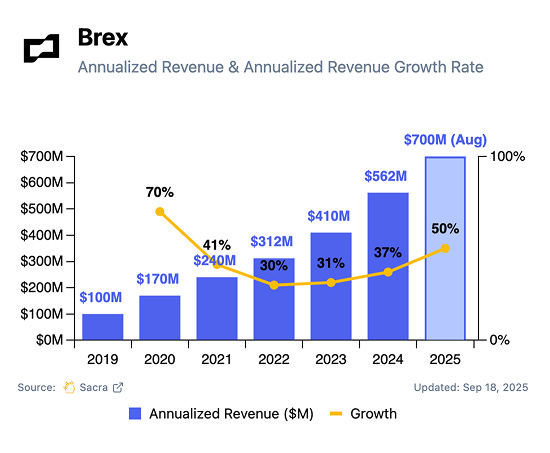
Capital One has agreed to acquire fintech unicorn Brex for $5.15 billion in cash and stock, which is a STEEP DROP from its peak $12.3 billion valuation in 2022. While the “down exit” fuels industry schadenfreude and highlights the dominance of rival Ramp (now valued at $32 billion), the deal is a pretty good victory for early investors. Ribbit Capital and Y Combinator, who backed Brex at its 2017 founding, are realizing ~700x returns. Not a bad day at the office.
Here are some key reasons for the acquisition:
Brex brings ~25,000 corporate clients, including heavy hitters like TikTok, DoorDash, and Coinbase.
Capital One gains a “software-first” expense management and corporate card platform that would have been too difficult/slow to build internally.
They want to compete better in the business spending market, where the company is liable (not the individual owner), a segment growing 9% annually.
The deal includes $13 billion in deposits and a valuable EU banking license for 30 countries.
Everyone is calling this a failure for Brex because it’s a fire sale. But what’s the actual causality here?
The narrative says, “Brex lost to Ramp, so Brex failed.” BUT, this is actually what a perfect VC play looks like. It’s all about the Power Law of entry points. If you enter at the Series A (Ribbit), a $5B exit is nothing to sneeze at. The logic works backward because taking an immense early risk -> massive dilution -> still escaping with 700x returns. It pretty much reframes the “failure” not as a collapse, but as a correction that only hurts the late-stage investors who bought the hype, but not the fundamentals.

Social media time does not increase teenagers’ mental health problems study shows:
A longitudinal study by the University of Manchester, tracking 25,000 teenagers, found no evidence that higher social media use or gaming frequency predicts increased anxiety or depression. The researchers argue the relationship is likely bidirectional or driven by external factors—suggesting that mental health struggles may lead to screen use rather than result from it.
The findings challenge the efficacy of proposed social media bans for under-16s, advocating instead for a focus on the content of interactions rather than duration.
We all “know” phones destroy kids, right? That’s the most common view.
Screens -> Dopamine Fry -> Depression.
But the data doesn’t support the simple arrow. If a kid is anxious, they retreat to screens. So I think that banning the screen removes the coping mechanism, not the root cause. It’s realizing that we want to blame screens because it’s an easy fix.
The Adolescence of Technology:
In his essay, Anthropic CEO Dario Amodei argues that halting AI development is geopolitically impossible, as it would cede dominance to authoritarian regimes. Instead, he proposes a “Realist” path: using chip export controls to slow adversaries, thereby buying democratic nations a “buffer” to develop powerful AI more safely. He basically outlines catastrophic risks (autonomy, misuse) but concludes that the only viable way forward is “entanglement,” which is racing responsibly to ensure the first superintelligence safeguards democratic values rather than autocracy.
Interestingly, Dario started this journey by leaving OpenAI because safety wasn’t a priority.
The original plan was to build a safety lab, not a product giant. The dilemma is that they realized you can’t shape the safety of a technology you don’t lead. If he stops, the “bad guys” (in his view, autocracies) win.
So the irony is that he had to build the very thing he fears to prevent a worse version of it from existing. He’s acknowledging that “for better or worse,” the only way out is through. I don’t think he’s promising safety, but rather, he’s promising a slightly better probability of survival than the alternative.
The AI Revolution: The Road to Superintelligence [Tim Urban’s Wait But Why]
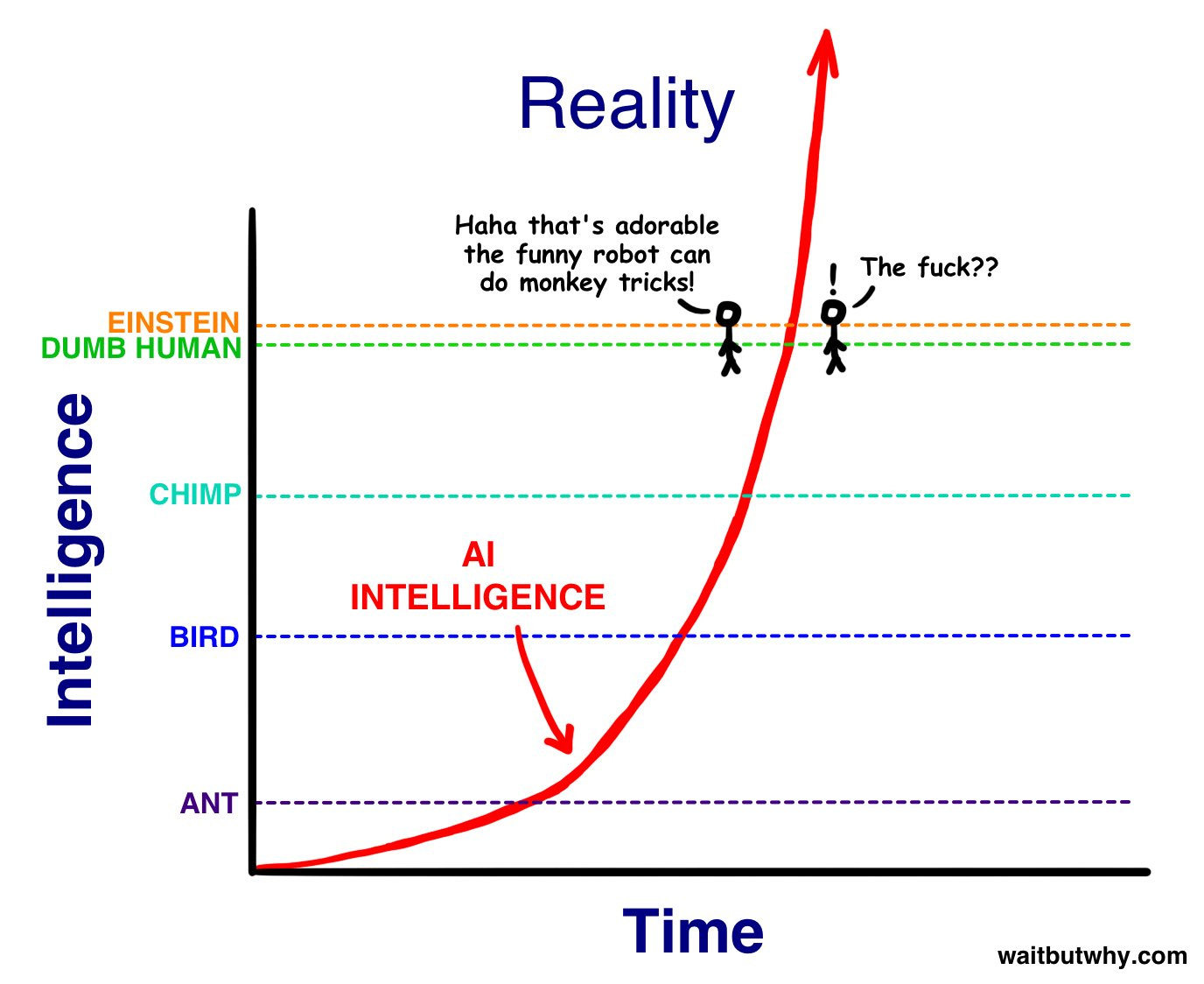
TRUE.
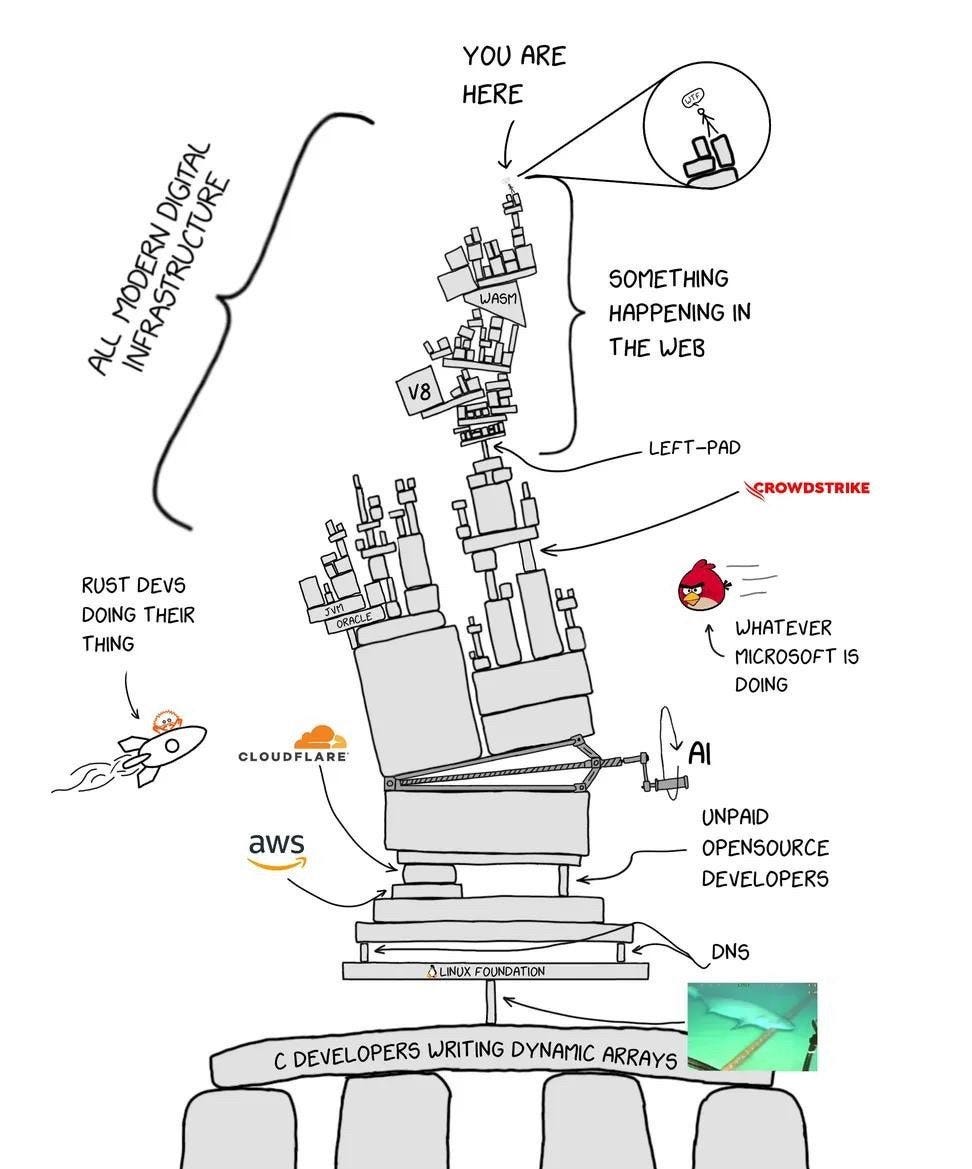
The role of AI in enterprise — this is a really good take on the future of AI in enterprise. You should watch the full episode.
“The software companies that should be the most worried right now is where they are pricing the product based on utility. Zendesk is a good example.
Instead of paying for 50 Zendesk seats, you can pay for 20 and I can have 30 AI agents sitting next to Zendesk.
For these companies you need to change your pricing model to be based on outcome. It’s going to be hard for them to stay public.
The companies that are less exposed are ones based on data that has been collected and captured over a period of time. ERP is a great example. There is no compelling reason for someone to put their career at stake by ripping out NetSuite.
NetSuite has more time to build AI agents on top of it because they have the data, they can train the AI agent on top of it and bundle it.
I think the public markets do not distinguish between these two types of companies.”


Thanks for reading so far.

If you liked the content so far, you can check out our full TWS archive, plus more in-depth content: under the hood and field guides.

If you’re a founder, apply here (Metagrove Ventures) for funding.

I’d love to get some feedback. If you have some time, fill out the following survey.

Want to get in front of our audience? You can partner with us.

Upgrade to the premium version for full access to all content.

Follow me on LinkedIn or X for more insights.
Note: If you’re reading this via email, click here to read the full post in case your email client shortens the full piece.
The Rise of Neoclouds — but what are they and why are they important?
It was recently announced that Nvidia had just invested an additional $2B in an interesting company called Coreweave, acquiring a stake of approximately 13% in the specialized cloud provider.
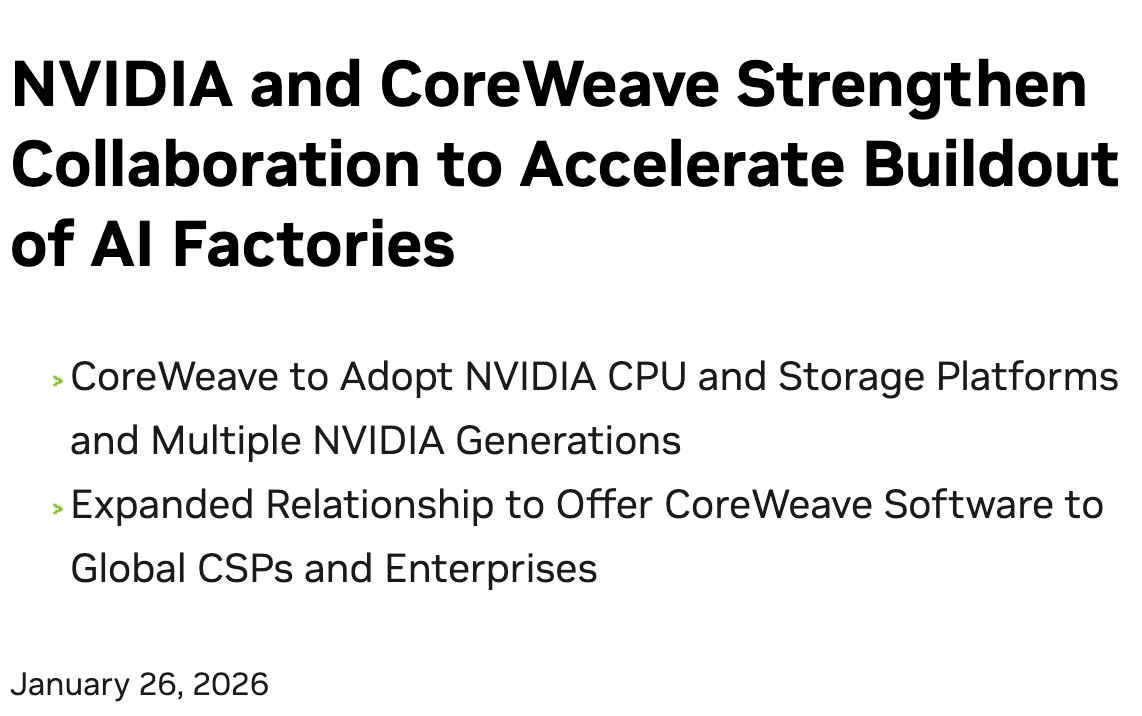
NVIDIA knows what’s up and even after CoreWeave’s 2025 IPO, they’re still continuing to pour money into the company — for a very good reason obviously….
The whole point of this deal represents a big expansion of Nvidia’s strategy, moving beyond chip manufacturing alone and into direct funding of physical infrastructure.
The grand plan is that CoreWeave aims to build out 5GW of installed capacity by 2030. Unlike general-purpose data centers that serve broad markets, this capacity focuses exclusively on AI workloads.
Vertical integration is now one of the top priorities.
By taking a stake in a cloud provider, Nvidia now guarantees these types of environments are natively designed for its high-performance hardware, which in turn reduces its reliance on third-party integrators who may not move fast enough.
But what’s a Neocloud
The term “Neocloud” is the new industry buzzword.
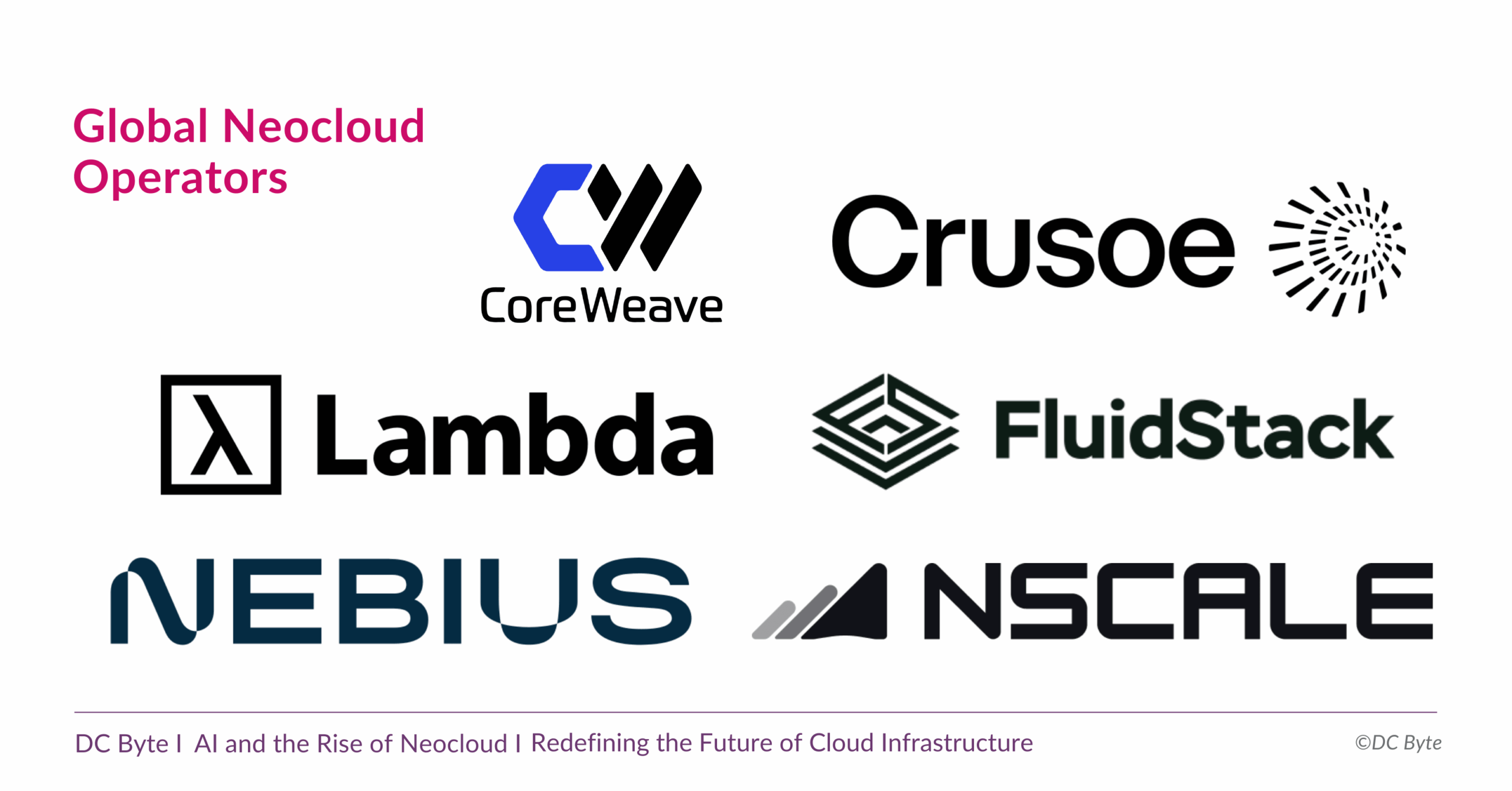
Here’s a more in-depth hierarchy of all the players:
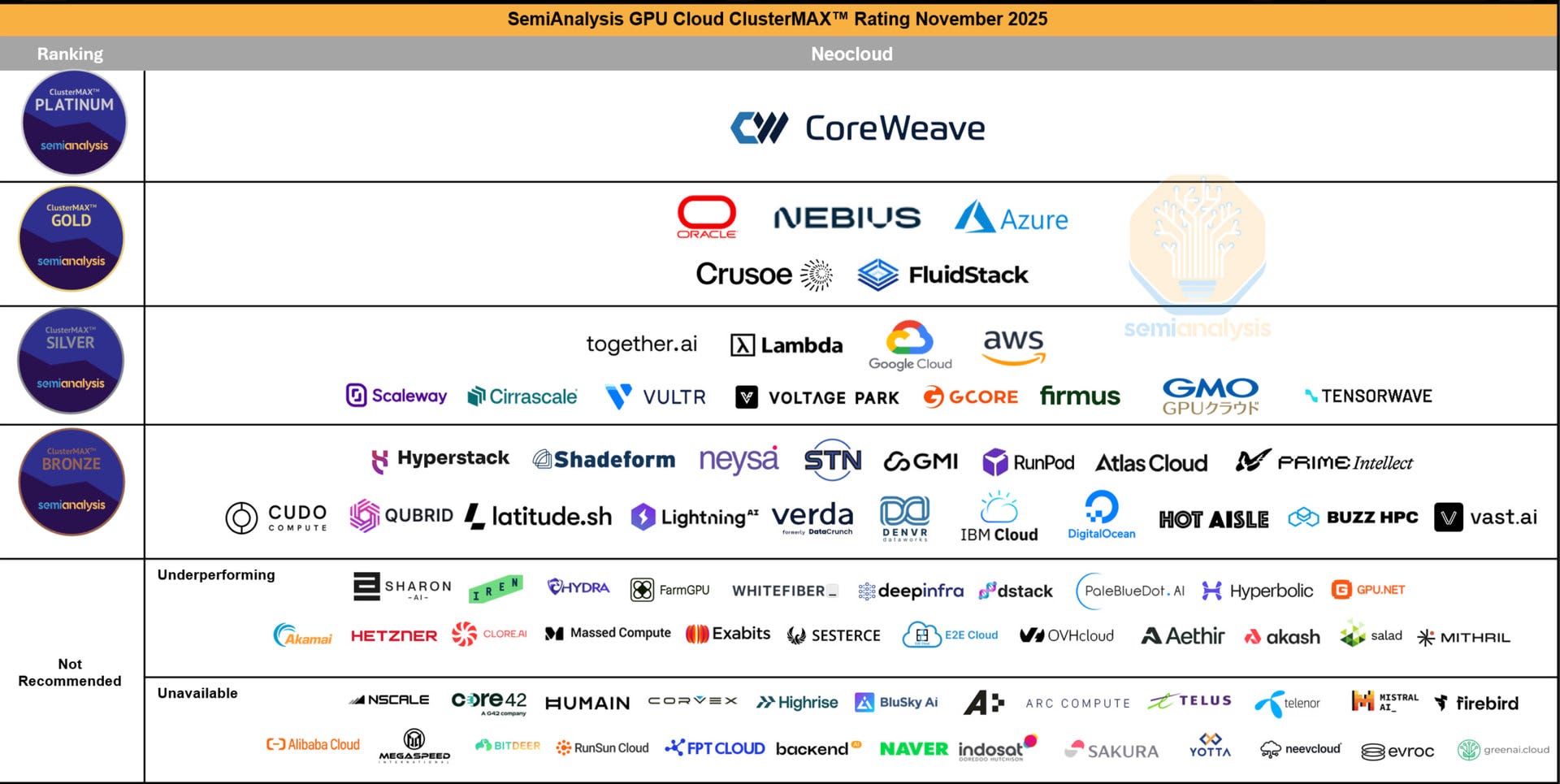
It basically refers to a rising class of providers like CoreWeave, Lambda, Crusoe, and others that are challenging the incumbents. They are distinct from the traditional “Hyperscalers” like AWS, Google Cloud, and Azure.
The technical difference is simple: virtualization.
Hyperscalers generalize because they take a powerful server and use software to slice it into thousands of tiny virtual machines (VMs). You can think of it as a shared office building: it’s efficient and accessible, but you have to navigate the hallways and interact with building management (which is called the “hypervisor). That management layer creates a tiny delay every time you ask the computer to think and do something.
Neoclouds are specialized as they remove the management software entirely. It’s what you call “bare metal”. Here, you aren’t really sharing the server with anyone else. Because there is no software middleman checking your badge or managing resources, your AI connects directly to the chips, which in turn gives you more speed and efficiency.
The whole idea of Neoclouds is that they don’t try to do everything. They only optimize for one thing, which is AI training and inference, and ignore the rest.
The Neocloud market is growing fast!

Coreweave’s Origins
Keep reading with a 7-day free trial
Subscribe to Alpha Bytes to keep reading this post and get 7 days of free access to the full post archives.