

Vibe Debugging: Why Building Fast Can Also Mean Breaking Everything (and How to Fix It)
The vibe collapse is real but very avoidable.

Welcome to this PAID EDITION where we go down the rabbit hole on business and technology strategy. Paid subscribers get full access to all newsletters, curated podcast Q&A notes, deep-dives and field guides. Thank you for reading and consider subscribing.
If you spend any time on developer forums on Reddit or tech circles on X, you’ll quickly realize that something called the “vibe collapse” is thrown around, and it can get pretty gnarly if you end up being on this side of the fence.
Have you heard of the infinite “prompt loop of death”?
This is the most common horror story shared because it showcases how alluring vibecoding has become, and when your only solution is to keep prompting…
Imagine launching your product to a massive spike in traffic. Suddenly, users start getting nasty 500 Internal Server Error alerts. The builder does what any dedicated vibe coder would do in a panic:
They copy the massive block of red error text and paste it right back into the LLM. “Fix this, please!” (saying “please” doesn’t really help IMO)
The AI eagerly obliges, spitting out a revised block of code. The vibe-coder blindly copies and pastes it.
The original error has disappeared, but now the login system is completely broken
They paste that new error in. The AI fixes the login, but accidentally rewrites the database routing logic.
Within two hours, the AI has systematically dismantled the entire architecture of the app while blindly chasing minor symptom after minor symptom
The builder is now left starting at a completely mangled codebase with absolutely zero understanding of how to restore it. 🫠
And it doesn’t stop there…
There’s also this phenomenon called “slopsquatting”, and this is where vibe coding crosses from just “frustrating” to “actively dangerous” territory. You should read this fascinating piece from Trend Micro on when AI agents start to hallucinate on code dependencies.
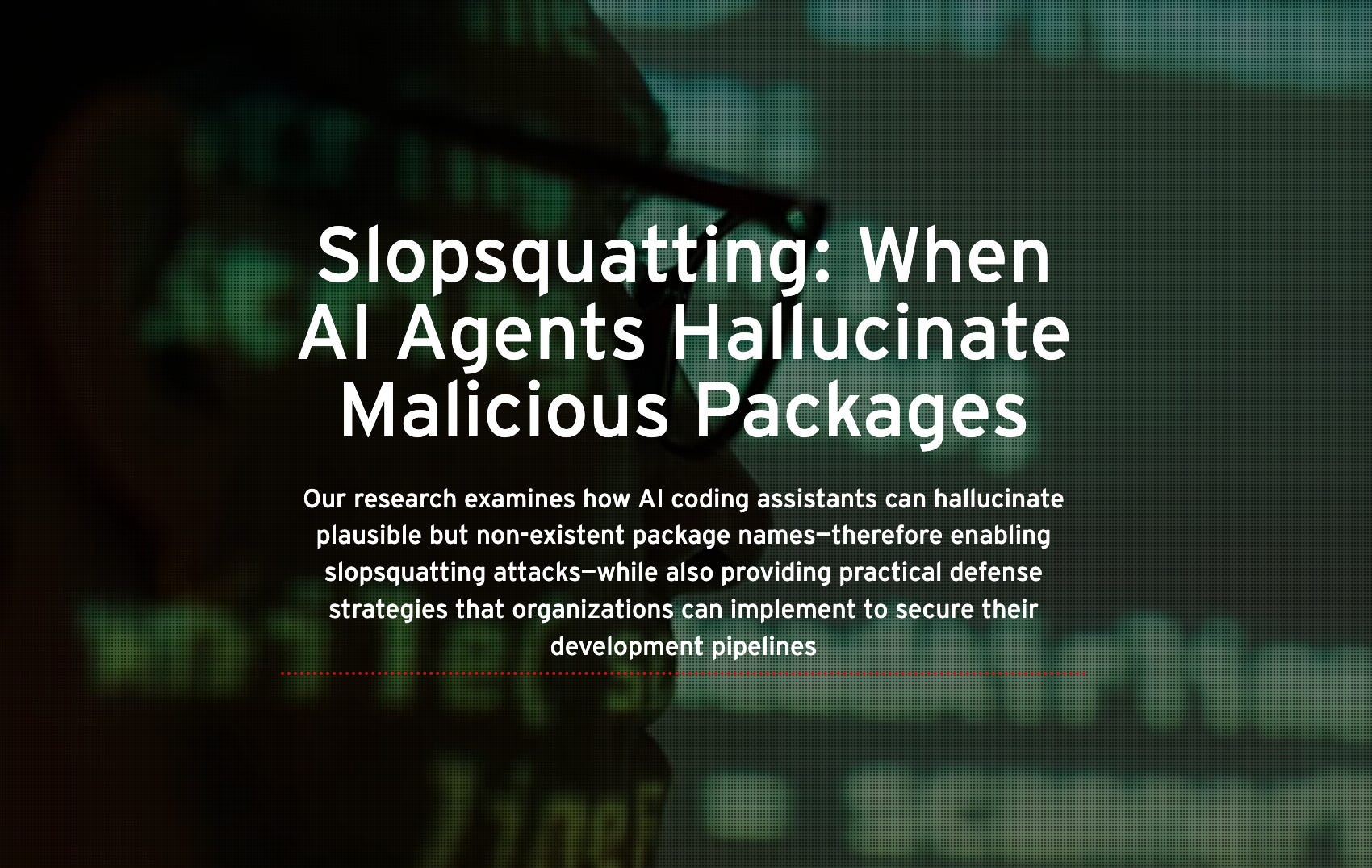
Here’s an excerpt that stuck out to me:
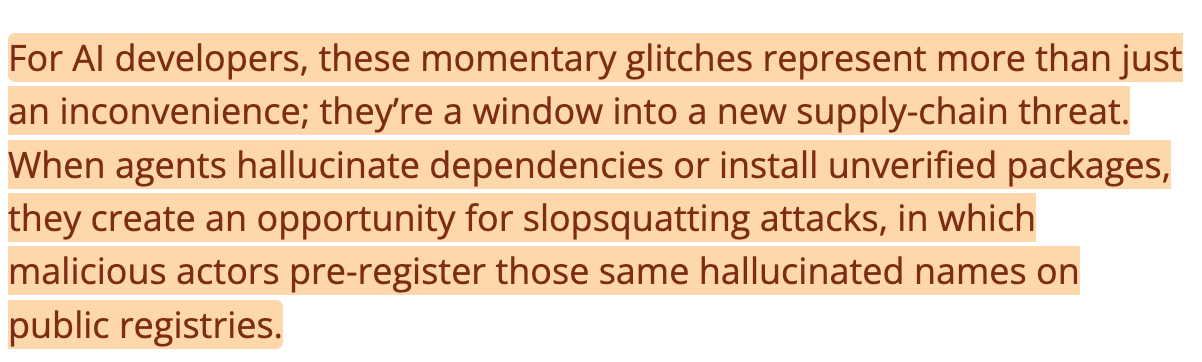
Basically, what happens is that a developer will ask the AI to build a specific feature. The AI will then hallucinate a piece of middleware software that sounds incredibly plausible, and write a terminal command to install it. Unknown to the founder, that package doesn’t actually exist, but hackers know AI occasionally hallucinates it. So hackers will intentionally register these hallucinated, fake package names on software package registries like NPM. Eventually, the developer unquestioningly runs the AI’s install command, and instead of getting a helpful library, they blindly download and execute malicious malware directly onto their local machine.
And this type of hallucination keeps going.
Even in the biggest engineering teams aren’t immune to this. Case in point: Amazon.
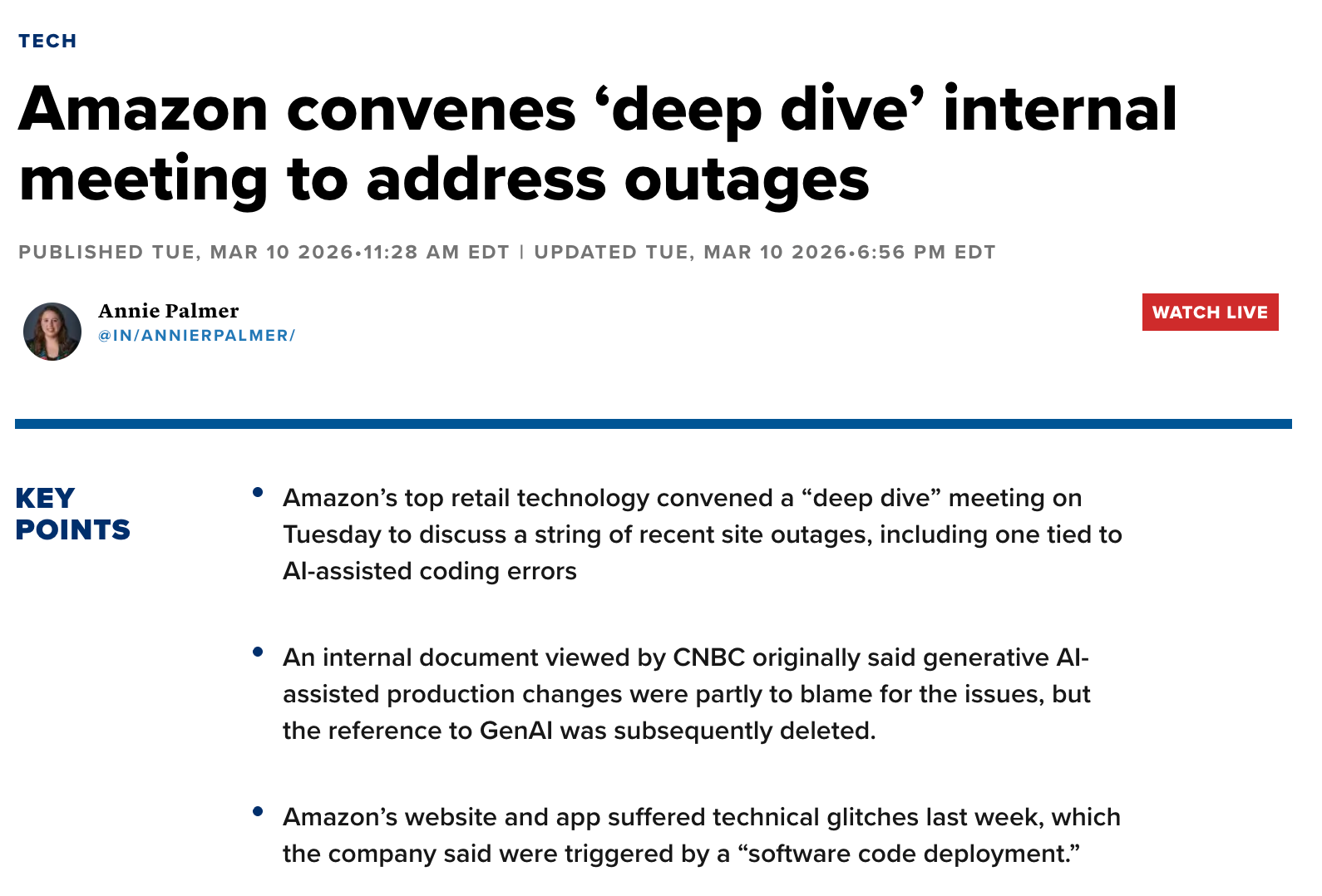
Recent outages across AWS have been traced directly back to Gen-AI-assisted infrastructure changes (although Amazon disputes this, as they obviously would). It turned out that support engineers used Amazon’s in-house coding assistant (Kira) to quickly generate and update complex infrastructure. It’s becoming clearer that developers are now being lulled into a false sense of security by AI’s confidence.
This is when vibe coding becomes “vibe debugging,” and it can be an absolute nightmare without a proper strategy.
This is why I wanted to write this piece: I’ve just heard and seen too many stories of vibe coding gone wrong. And because it’s still a frontier space right now, there’s plenty of opportunity to learn from the mistakes of others (including myself) so that everyone can benefit and start building products with some semblance of structure, strategy, and methodology.
The Vibe Journey So Far
I think we can all agree that the concept of vibe coding has been a net positive and one of the best things to happen to software engineering in a very long time. Yes, I know some people cringe at this term—you can call it “prompt engineering” if it makes you feel any better, but it is what it is.
Over the past two years, I’ve watched as non-technical builders have begun creating apps out of thin air. We aren’t talking about simple, highly-styled landing pages or basic drag-and-drop website builders, too — we’re talking about massive, multi-tiered software applications with functional databases, user auth, and dynamic API integrations.
This is the magic of “vibe coding”.
For the uninitiated, vibe coding is essentially programming by intuition and natural language. It’s translating your “vibes” — which are your ideas, visual concepts, and user flows into reality without holding any of the technical baggage. Think of it as the democratization of software creation on a scale we’ve never seen before.
But obviously, as the horror stories above just proved…it can potentially be a massive, terrifying trap, if not performed correctly.
At the end of the day, generating code is remarkably easy. It’s cheap, instantaneous, and highly addictive. Starting at an empty screen and suddenly seeing a login portal, a responsive dashboard, and a pretty landing page is basically modern-day wizardry. But understanding why that generated code could fail requires deep structural knowledge—knowledge that the vibe coding philosophy entirely skips.
Given where we are right now with the latest AI models, it’s apt to talk about the addictive nature of instant technical gratification, and the critical safety nets you should put in place before you start building your next app…
The Dompanine Hit
Let’s set the stage. Before the advent of LLM models like Claude, GPT, etc., as well as tools like Cursor and Claude Code, building software required one of two things: either spending years learning to code yourself, or spending/raising $$$ to hire an engineering team. The barrier to entry was a massive, intimidating wall that locked out millions of creative people.
Vibe coding has torn all of that down.
Now, a solo founder with a decent idea but absolutely zero technical background can sit down on a Friday evening and type: “build me a SaaS CRM tailored for freelance graphic designers with an integrated Stripe invoicing system”, and then by Sunday, they have a working MVP.
This is a HUGE leap forward, and this empowerment has become purely intoxicating.
But I really want to focus on and emphasize that word: intoxicating.
It’s become a drug.
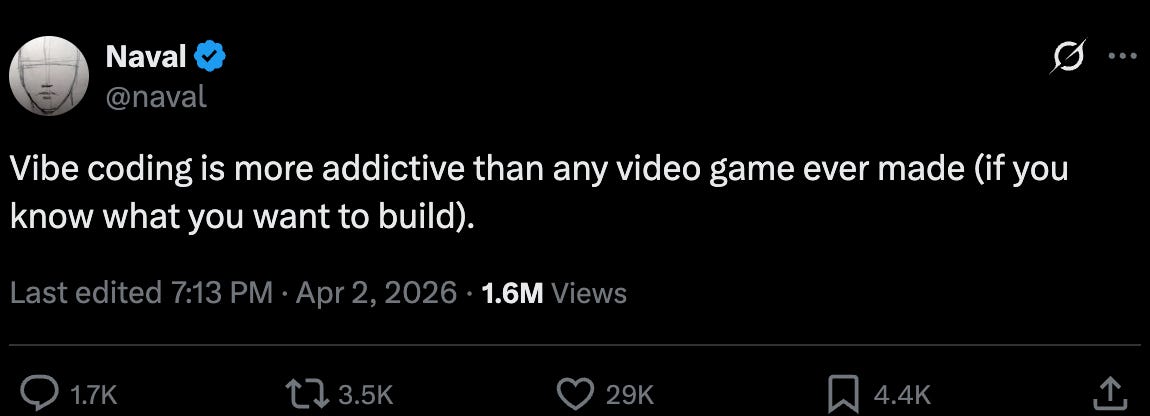
There is an undeniable dopamine hit of instant gratification that comes with prompting an AI. You simply describe a feature you just thought of, and within seconds, you see a working prototype on your screen. It feels like you possess superpowers.
And precisely because it’s so incredibly fast and frictionless, the immediate temptation is to just keep going. You can’t stop. Why stop at basic CRM? Let’s add an email drafter. Let’s integrate real-time push notifications. Let’s add a chat feature so users can collaborate directly. Let’s add analytics, etc., etc., etc.
Ultimately, you’re moving so fast, riding the massive high of pure creation, that you can completely ignore the structural, architectural integrity of what you’re building.
And then, you hit the wall. The vibe breaks.
Safety Nets
Now, let me pause and make one thing clear before we go any further: I am a proponent of vibe coding. I’m NOT an elitist engineer suggesting that you should immediately abandon your AI tools and study Computer Science just to prove you’re a “real programmer”.
Vibe coding is unquestionably the future of building software.
It’s an irreversible paradigm shift, and I strongly believe every single builder should be actively leveraging these AI tools to move 10x (or more) faster.
BUT, driving a multi-million dollar Ferrari while wearing a blindfold is a terrible idea, regardless of how insanely powerful your engine is.
The goal here isn’t to discourage you from using AI. The goal is entirely practical: simply establish essential technical safety nets. You should be able to continue to heavily vibe code at warp speed, but forcefully adopt the mindset, caution, and discipline of a seasoned engineer. You don’t need to memorize the code syntax, but you must understand the overarching structure of your project.
Here’s a practical, battle-tested getting-started guide to safely building robust software, without plunging headfirst into an agonizing debugging rabbit hole.
A Practical Guide
Here’s what we’ll be going through:
Pre-flight mental checklist
Building design docs, rules, and upfront planning
Test harnesses
Version control & strict checkpointing
Scope containment
Collaboration
1. A Pre-Flight Mental Checklist
Before you sit down, open your IDE (Cursor, Claude Code, Antigravity, etc.) and start casually “vibing” out an exciting new feature, you should actively force yourself to step out of that dopamine-driven rapid creation cycle. Take a pause, and ask yourself a concrete list of critical flight questions:
What strictly, highly isolated feature am I trying to build today? The idea here is that you must set strict, unyielding boundaries for your current session. If you sit down explicitly intending to build an email login flow, do not suddenly pivot to building integrated search functionality simply because the AI suggested it might look cool. Build one thing, and that one thing only. In software land, this is called “separation of concerns.” It allows you to create highly modular code that reduces interdependencies on parts of your software.
Do I have a perfectly working, deliberately saved version of my app right now before I start modifying it? Never, ever start blindly making modifications to your codebase if you don’t have a guaranteed and stable version tucked away to fall back on. This rule is 100% non-negotiable. If you break it, it can get pretty ugly in a hurry, and a nightmare to figure out which stable version you last worked on.
If the AI completely and utterly ruins my app in the next ten minutes, do I know exactly how to confidently revert to the last working version? If the answer to this question isn’t an immediate and confident “yes”, then you must completely stop coding right now and go learn how to save your state using version control tools like GitHub. Here’s a good beginner’s guide to GitHub from HubSpot that you can read.
2. Design Docs, Rules, and the Upfront Planning
This is exactly where the vast majority of builders fail. Don’t get me wrong, state-of-the-art models like Claude Opus and GPT-5.x are insanely capable, but they still can be delusional, hallucinate, and possess functional short-term attention spans. They still need a cohesive, consistent, overarching context to succeed.
Vibe coding an entire platform without an established plan is like attempting to randomly build a house without a blueprint by simply yelling at a team of blindfolded construction workers.
Upfront planning is vital. It’s your lifeline. Before you ever hit ‘generate’ to spit out a single line of code, you must clearly map out exactly what the application is supposed to do.
Keep reading with a 7-day free trial
Subscribe to Alpha Bytes to keep reading this post and get 7 days of free access to the full post archives.