

How to Build a Billion Dollar Brand | Stef Ivanov (Pony Studio)


Welcome to this edition of our Tactical Field Guide series. This is where we go down the rabbit hole on tactical advice to help you become a better builder, leader, and thinker. We also release a weekly newsletter (The Weekly Signal) showcasing the latest curated signals across technology and innovation. Thanks for reading.
Dear Readers:
If you’re a founder, operator, or builder, you already know the pressure to “get your brand right” is intense. Everyone tells you branding is essential, but no one really explains how to do it in a way that actually moves the needle for your business. The general advice is “hire an agency”, “create a killer logo”, or even “find your unique story”. But when you follow the usual playbook, you often end up with something that looks great on paper but doesn’t really help you win real customers or stand out from all the noise.
The real problem is that most early-stage founders approach branding as ticking off a checklist. They spend money on design, messaging, and PR before their product is ready or before they’ve figured out what truly makes them different. They imitate other successful startups, hoping some of that magic will rub off. But the results are usually disappointing, with lots of noise, little traction, and a brand that feels generic or disconnected from the real work you’re doing.
Most founders usually pour hours and dollars into branding projects, but then realize that their efforts didn’t stick or resonate. And it turns out they’re building their brand from the outside in, not the inside out.
So hopefully this field guide should help.
I wanted to cut through the confusion and share some practical and honest thoughts from Stef Ivanov, someone who’s helped dozens of startups build brands that actually work. His core belief is that having clarity, consistency, and even the courage to stand for something, even if it means ignoring the latest trends or saying no to easy shortcuts, will take your brand much further.
Stef Ivanov is the Founder and Creative Director at Pony Studio, a branding agency that helps tech companies build iconic brands and digital products. Based in London, Stef has over a decade of experience as a designer and front-end developer, working with countless startups and scaleups, including those backed by Y Combinator, Techstars, and Seedcamp. He’s known for his hands-on approach to branding, design, and strategy
If you want to learn more about effective brand building, you can check out Stef’s Branding Studio, Pony.studio, to see how you could work with him and his team. You can also read Stef’s Substack F*NORM.
Today, we’ll go over:
The most common branding mistake early-stage founders make
What “brand” really means in the age of AI-generated design
When founders should start thinking about their brand, and first steps to take
The difference between real branding and just having a good-looking logo or website
Examples of early-stage companies with strong brands and the role of culture
How a founder’s own story shapes the brand early on
The highest-leverage branding investments when resources are tight
How founders can discover and define their brand voice
Simple ways to build a sense of belonging and community around a new brand
How to tell if your brand is resonating or just “noise”
How a brand should evolve as the company grows, and warning signs it’s time
How non-marketers can avoid the “sameness trap” with templates and AI tools for a shift
One piece of advice for founders starting from zero
Let’s dive in.
Q: You’ve worked with startups from Y Combinator to Techstars and have seen it all when it comes to branding. What’s the most common branding mistake you see early-stage founders make?
Stef: The biggest mistake I see is confusing brand depth with brand expense. Early founders (pre-seed to Seed) often think hiring a big agency, rolling out merch, chasing press, or crafting messaging for five personas will solve their real problem, when the product itself isn’t ready yet.
At this stage, branding should be brutally simple: a clear promise, a sharp look, and relentless consistency. You have to prove people want what you’re selling. The rest can wait.
Later on, around Series A and beyond, the trap is treating the brand as a one-off event. Founders spend big on a rebrand and think the job’s done. But branding is a long game—it takes years of consistency before people notice and remember you. Most startups are playing short-term games, not building long-term memory.
Across the board, too many teams focus on making things “pretty” or just imitating brands they admire. That’s safe, but it rarely pays off. The real question is: what makes us radically different? Where’s the gap in our industry that we can own? And do we have the guts to stand there? That’s how you build a brand people actually talk about.
Here are some key red flags to look out for:
You’re spending more on swag than on solving support tickets.
You’ve got five buyer personas but zero real traction.
You’re rebranding every year because you’re bored, not because the market needs it.
You care more about looking like your favorite brand than becoming the brand in your space.
Q: It’s fair to say that AI is all around us. It’s so easy to access and use. In a world where AI can generate logos and websites in minutes, what does “brand” actually mean for a young company?
Stef: AI has leveled the playing field. Soon, every brand will have cool visuals, slick sites, clever copy, all generated in minutes. That’s not differentiation anymore.
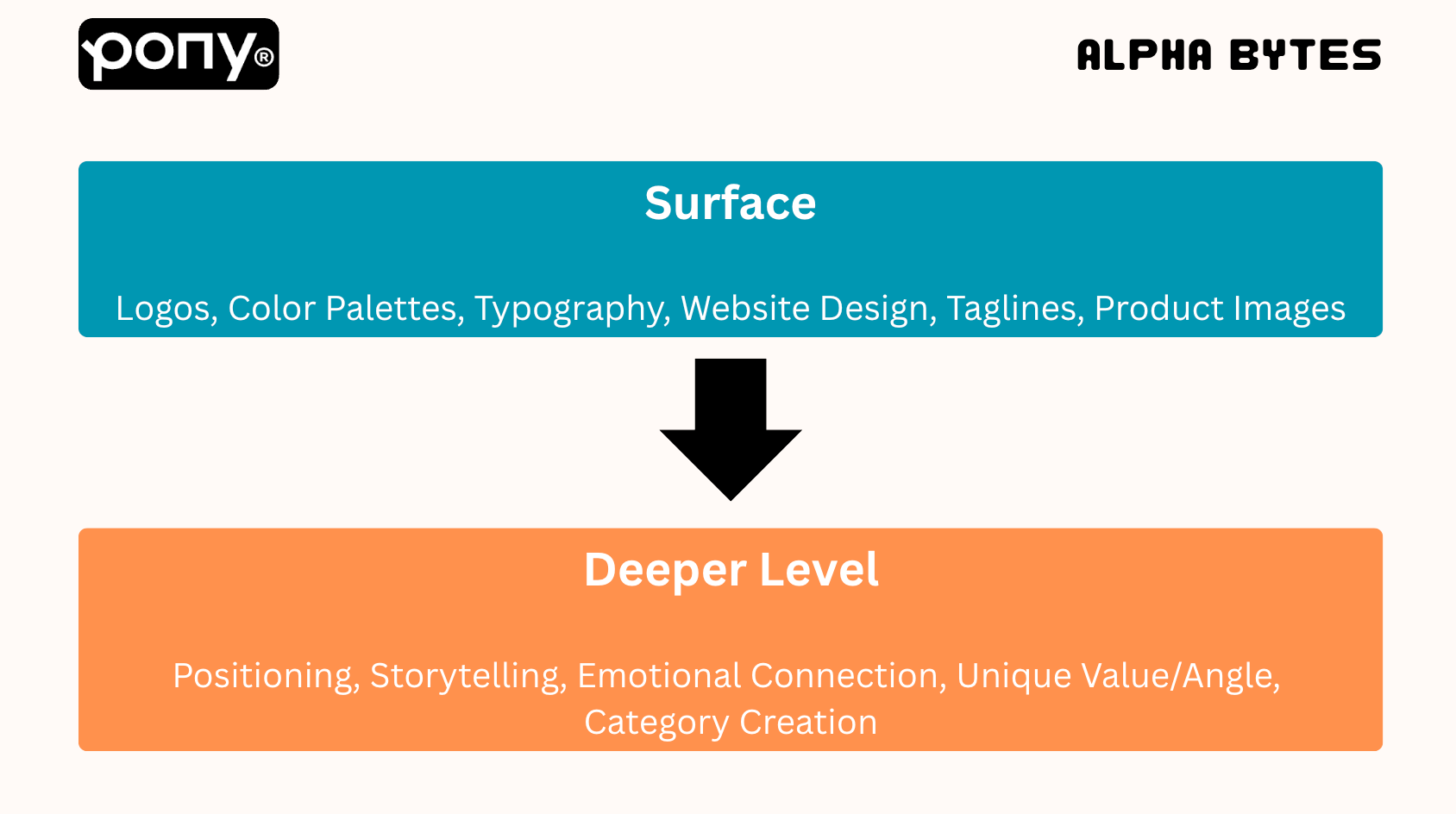
Now, brand is about what’s felt, not just what’s seen. It’s how you’re positioned in people’s minds, the story you tell, the category you create, the unique angle you own. For example, if you’re building a time-tracking app, AI can make it look beautiful. But are you just another time tracker? Or do you reframe it as a platform for employee well-being or unlocking peak performance?
Brand is moving from what’s visible to what’s felt. Ironically, that makes it even more valuable. This is why it’s so important to build a brand on both the surface and deeper levels.
Q: When you think about the stage of a company, how early should founders start thinking about their brand, and what are the first steps they should take?
Stef: Honestly? Day one. But not in the way most people think.
You don’t need a full brand system or fancy design out of the gate; you just need to look real enough that people trust you. Early on, brand is about positioning—getting clear on your edge, your angle, why you exist, and what makes you worth noticing. The visuals can evolve, but your point of view is what matters most.
And don’t underestimate your own presence. Social doesn’t care about company updates anymore; founders have to be ambassadors. People buy from people.
Practical Tips:
Keep reading with a 7-day free trial
Subscribe to Alpha Bytes to keep reading this post and get 7 days of free access to the full post archives.
 | A guest post by
|