

#006: 5 steps to evaluate an early-stage startup investment


For our own success to be real, it must contribute to the success of others — Eleanor Roosevelt
Investing in an idea, a company, or the founders are some of the most powerful things you can do to bring an idea into reality — it's pure magic and highly rewarding. It can single-handedly make or break a business. If done right, startup investing has the potential to revolutionize industries, create new markets, improve lives, and hopefully change the world for the better.
But there's a catch — deciding to invest your own money, let alone other people's valuable dollars into an early-stage company can be an extremely risky proposition. This is a fact. However, if you know what you're looking for and can understand the key tenets involved in predicting a company's growth and market impact, we would all be in a much better position to make informed investment decisions and navigate the waters of early-stage investing.
The following list is a recipe of steps I typically take when evaluating a potential investment. It should be made clear that this is not exhaustive by any means — it's a primer to get your mind into the right gear of thinking, but should hopefully put you in the right frame of mind to begin evaluating investments systematically.
Before we begin; a few caveats and assumptions — a basic prototype or commonly known as a Minimum Viable Product (MVP) is required. I don't care how "early-stage" your company is, but there needs to be a basic prototype available. This could be a simple mobile app, basic online web portal/UI, piece of clunky hardware to play with, etc. The idea is that if a picture can speak a thousand words, then a prototype can speak a thousand PowerPoint presentations. Moreover, there needs to be a potential product-market fit in question; meaning your offering should already have a target market in mind, who are willing to use the product.
OK great! We have everything we need. Now let's try to figure out how we're going to make the decision to invest money into some new venture.
1. Satisfying Inner Needs
If you think about it, every product or service you use and more importantly, what you pay for; at its core is doing something special that satisfies an inner requirement we all have as human beings — it's satisfying a need. This can be exemplified in Maslow's Hierarchy of Needs shown below. Although simple in form, it does showcase the potential impact of an idea on the market. It's a good starting point to understand if a company's offering has what it takes to find a good product-market fit and a niche that can be satisfied.
A few notable examples include:
Facebook - Belongingness to connect with one another
Google - Self-actualization in the pursuit of knowledge
Instagram - Esteem needs to showcase your achievements and status
Tinder/Bumble - Belongingness to find and establish intimate relationships with others
Airbnb - Physiological needs to search and live in places that stimulate rest and warmth
Robinhood - Safety needs, physiological, and esteem needs in building wealth and financial success in promoting a better life and standard of living.
Don't get me wrong, a few products/services may not be as easy to categorize as the aforementioned examples, but if thought through enough will sit somewhere in the pyramid.
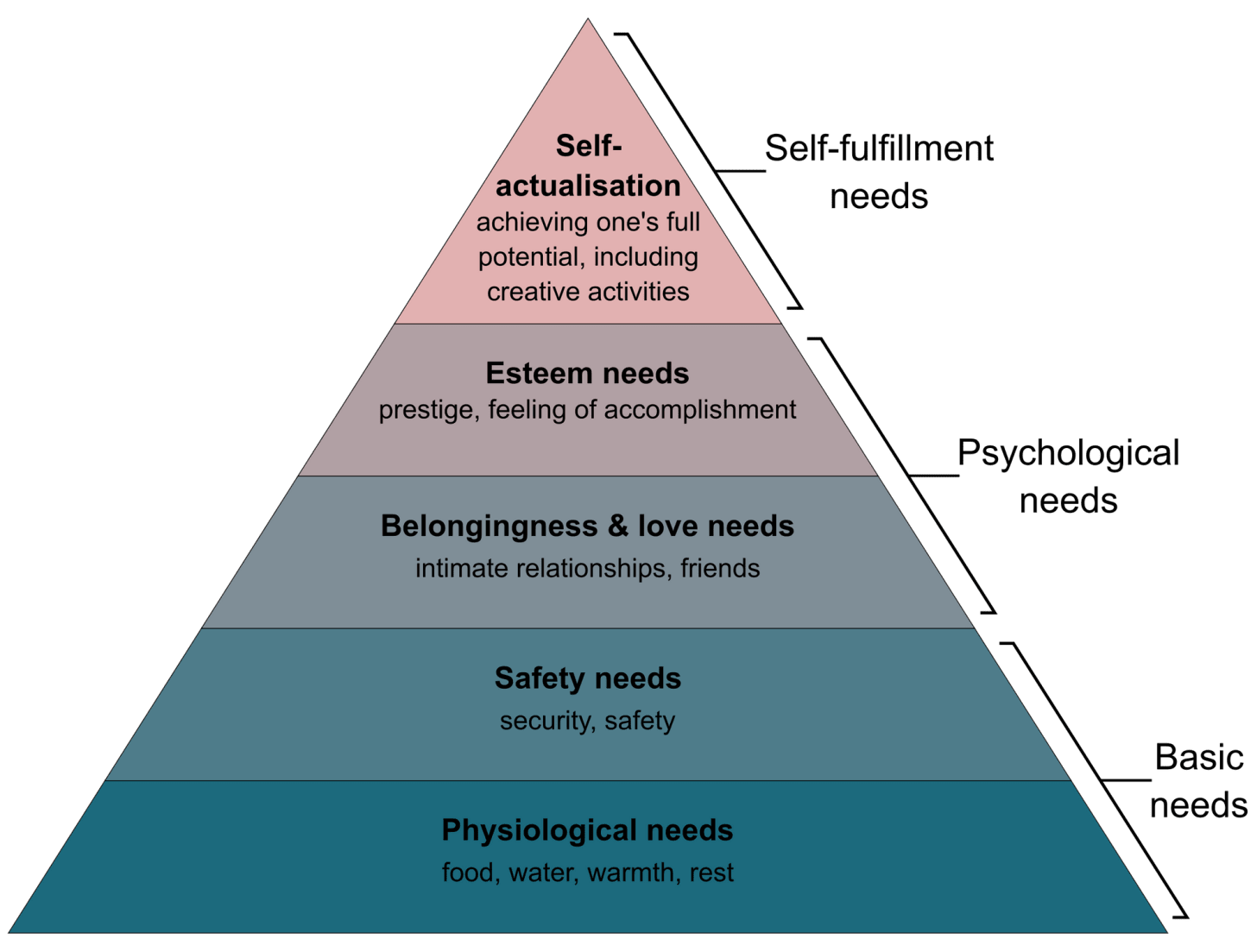
Having some indication of what needs a product satisfies can be key to finding a company's potential north star and from there, guide both the founders and the investors in refining the business model and go-to-market strategy.
2. Know Thy Founders
At such an early stage, as the investor, you really don't have anything to go off in understanding the pedigree of the company. In most cases, it probably has no market share, very little financial backing (hopefully bootstrapped), basic prototype in hand, little brand awareness, zero reputation, small customer base, and the list goes on — understandably, it's difficult to make informed decisions about its future.
It's also important to acknowledge that the founder(s) are at this point the most pivotal components of the company. The very nature of the idea and vision of the business rests entirely on their shoulders. For this reason, it is paramount that you intimately understand everything there is to know about the founders. This obviously is not a new concept in early-stage investing, but simply requires reinforcement in emphasizing the importance of the investor-founder relationship.
At the end of the day, the founders need to convey to you why they're the best person for the job.
A few questions to consider during founder evaluation;
What do they know about the market and industry that gives them and the company a potential edge?
Have they previously worked in the industry?
Do they have access to any "secret sauce" that puts them at a competitive advantage?
Do they each have a special strength i.e. sales, engineering, product, marketing, operations, etc. they can utilize in building the business?
If you can get a good answer to most of these questions, I think you're heading in the right direction and probably onto something as well. But wait, there's more.
Having the background, insight, experience, and skill set is great, but I personally feel that there needs to be one more additional ingredient to the overall company's success; and that is a founder's character, drive, and passion. It's one of the best assets you can find in a founder and if they have the grit, resourcefulness, and determination to do whatever it takes, then you're probably in good hands.
3. A Competitive Balance
Competition is healthy.
Having competition is a sign that the company is going to get a slice of the market when it's their time to launch. Meaning, there are people out there who are willing to pay for the product or service. In addition, it indicates that there is a need and demand for such services based on current market sentiment — so you're in the right place.
On the flip side, if a company is planning on entering an already saturated marketplace, then it can sometimes be challenging (but not impossible) to achieve market traction. This is where the founders need some competitive advantage using their "secret sauce" or the like in achieving product-market fit.
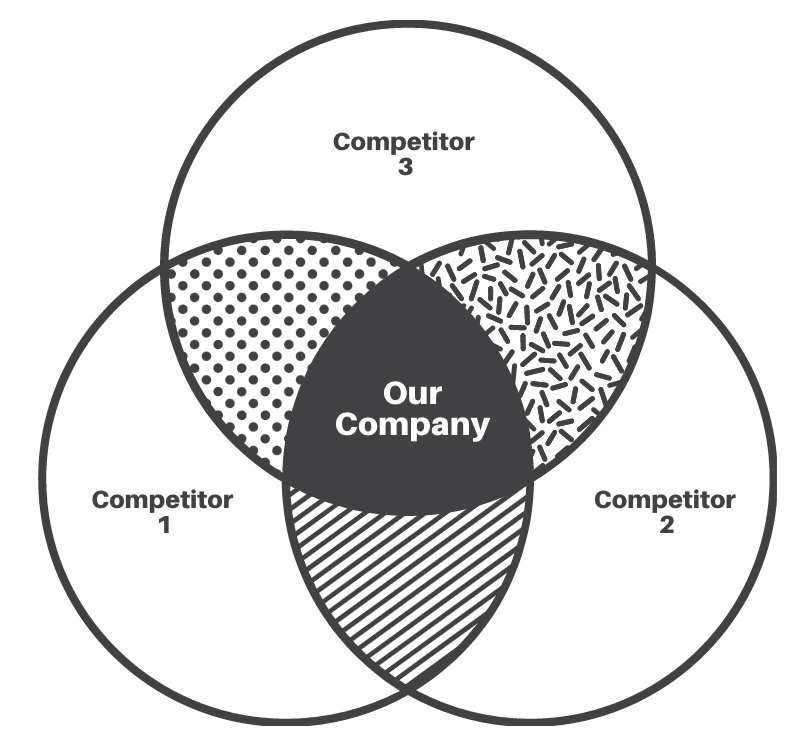
A nice way of thinking about this is through a Venn diagram as shown below — find where a company fits in and double-down.
4. Make it Sticky
The stickiness of a product or service is often key if you want to have good conversion amongst your user base. At its core, it's to ensure that new users will eventuate into repeat ones in such a way that they will find it difficult to go back to another competitive service or simply cannot live without the product because it offers unique and useful features to the end-user.
This reinforces the importance to have a prototype available in such situations. It becomes easier to identify paths to stickiness when you get a feel of how the product will look and feel.
Some examples of product stickiness may include;
Seamless and user-friendly interface and design
Useful third-party integrations
Insightful value into specific data and metrics
Quick and fast
Increased convenience
Slack is a prime example who made it big on honing and developing its stickiness factor. They were able to lure and incentivize users to stay on the service through their sleek user interface, third-party integrations, mobile/desktop apps, and animated GIFs. Most importantly its ability to create workspaces, channels and include members from within and outside the user's organizations was a big seller. After this, no one really wanted to go back to life before Slack.
Stickiness is challenging to find and implement, but once achieved, can certainly shape and form a company's trajectory for future success.
5. Bring On The Tech
At the heart of every successful company is its underlying technology. Without a good foundation of technology, it's very hard to compete in a world where technology is now the backbone of society and human progress.
Understandably, not all investors are technically savvy. However, it's important to ensure that as you the investor, be performing due diligence on the company by bringing in someone who is capable of understanding and evaluating a company's technology stack and roadmap.
Having a grand idea and vision is only one piece of the puzzle. Execution is another. Remember to keep your founders accountable and ensure they are hiring the right team to build and rollout out the technology in a systematic manner.
Investing in the right companies is hard. Do your due diligence and get a second opinion, or third before putting your money down. Don’t rush and remember to forge a strong relationship with the founders. Changing the world is one step away.
Good luck!
Tweet of the Week

Follow me on Twitter for all my musings and thoughts on Venture Capital, tech, engineering, personal growth, and more.